The Future of Shopping is AI-Powered—And Irish Businesses Have Time to Get Ready
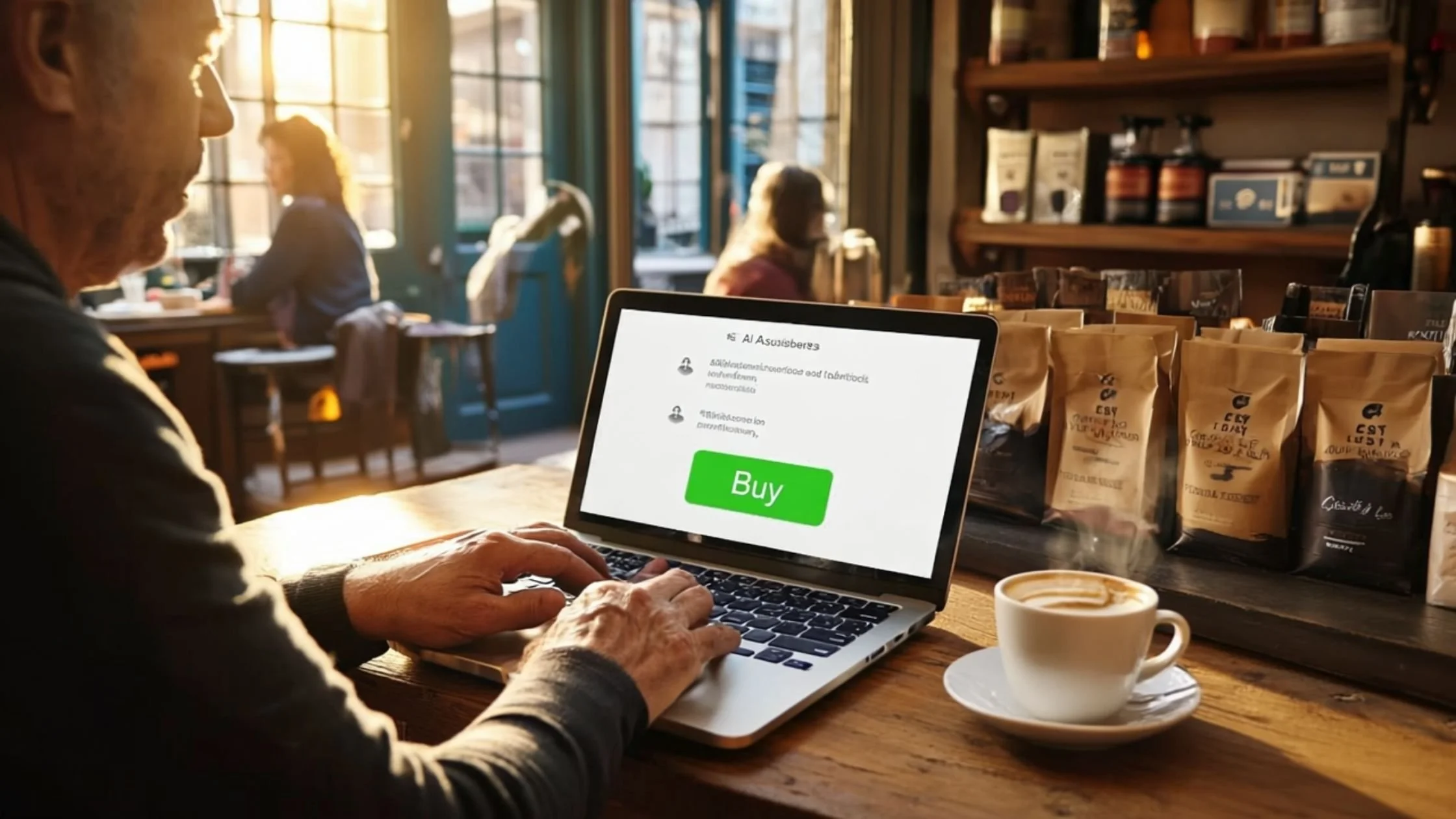
Estimated read: 7 minutesIf you run a business in Ireland, you may have seen headlines about people in the U.S. buying straight inside ChatGPT—from retailers like Walmart or from Shopify and Etsy shops. You can’t do that here… yet. Use the gap to get ready. Learn how assistants choose, tidy your product data, and make your brand the one a customer asks for by name.
ChatGPT now supports Instant Checkout, a one-item purchase flow inside the chat. It’s powered by the Agentic Commerce Protocol (ACP)—an open standard, codeveloped with Stripe, that lets assistants place orders with eligible merchants. U.S. Etsy sellers are live; Shopify support is phased; Walmart is “coming soon.” Irish rollout is not announced.
Payment options are expanding. PayPal has announced it will integrate with ChatGPT’s Instant Checkout, with availability beginning in 2026 and varying by market. Treat timelines as tentative until local dates are confirmed.
Six actions to take now
The 15–30–60 ladder
15 minutes: Rewrite one product page in natural language: who it’s for, what it solves, what’s different, proof you can name.30 minutes: Ask an AI assistant three buyer-style prompts in your category; note which brands appear and why.60 minutes: Standardise five SKUs (titles, variants, materials), and send three review requests.Make your difference quotable
State specific, verifiable facts. Replace “quality products since 1998” with “hand-finished in Ennistymon using Irish beech; repair service in 5 days.” Assistants surface copy they can cite.Optimise for answer engines, not just search engines
Use clear questions and answers on product and FAQ pages. Name entities (place, materials, certifications, suppliers) the way a buyer would ask. This improves how assistants “read” your pages and how people skim.Tighten marketplace fundamentals (Shopify/Etsy)
Complete profiles, policies, attributes, variants, and reviews. These fields map cleanly into assistant responses and determine eligibility for chat-native checkout as platforms expand.Run monthly “agent reconnaissance”
Prompts to test and log e.g. “Find an authentic Irish [product] made from [material] with [distinctive trait].” or “Recommend a Dublin-based [service] with case studies in [sector].” Record which brands appear and which facts get quoted. Adjust titles, bullets, and FAQs accordingly.Build proof beyond your website
Secure mentions in reputable directories, local press, and specialist blogs. Consistent third-party corroboration increases your odds of being recommended when assistants triangulate sources.
What are the Risks and how to solve for them
Margin squeeze: If your offer reads generic, assistants default to price, delivery speed, and ratings. Counter by naming what only you can claim (people, place, materials) and placing those proofs on product pages and profile fields.
Weaker direct relationships: When checkout happens in-assistant, you risk less first-party data. Counter with clear post-purchase flows (review request, care guide, community invite) and explicit consent capture tied to value.
Process ambiguity (refunds/complaints): Define refunds, complaints, and warranty routing for assistant-origin orders and publish one policy URL you can point to in replies. Test it quarterly.
Turn your brand story into machine-readable proof
Make your story legible to humans and assistants. Here’s a quick checklist you can reference on every hero product page. Check you are showing:
Who, What & When: who it’s for, what its used for and when it’s used.
Why: Why its better then the rest - three specifics, no adjectives.
Where & How: Cite the materials & provenance. Places, suppliers, certifications.
Get Details: Care, Fit, Sizing. Think concrete, not generic.
Proof: Reviews, years trading, awards, press mentions.
One-sentence “quote line”: Less than 20 words the assistant could lift verbatim. e.g. “Hand-knitted in County Kerry using wool from Wicklow flocks; sized for winter commutes; repair service available within 10 days.”
FAQs
-
Not yet for local buyers. If you sell to supported markets, your catalogue can still be discovered—and sometimes purchased—via assistants.
-
Yes. Shift emphasis toward AEO: answer-ready copy, named entities, and structured data assistants can quote without guesswork.
-
Rewrite one product page in plain English with verifiable origins, test three buyer-style prompts, and request three reviews on a hero SKU. Then repeat weekly for a month.
-
Only if you let them. Add post-purchase sequences with explicit consent and a clear value exchange (care tips, priority access, repair perks).